
Lovable For Beginners
#Lovable for Beginners
A free, current, production-minded course for building full-stack web apps with AI
Plan the product. Build the interface. Connect the backend. Test it. Secure it. Ship it.









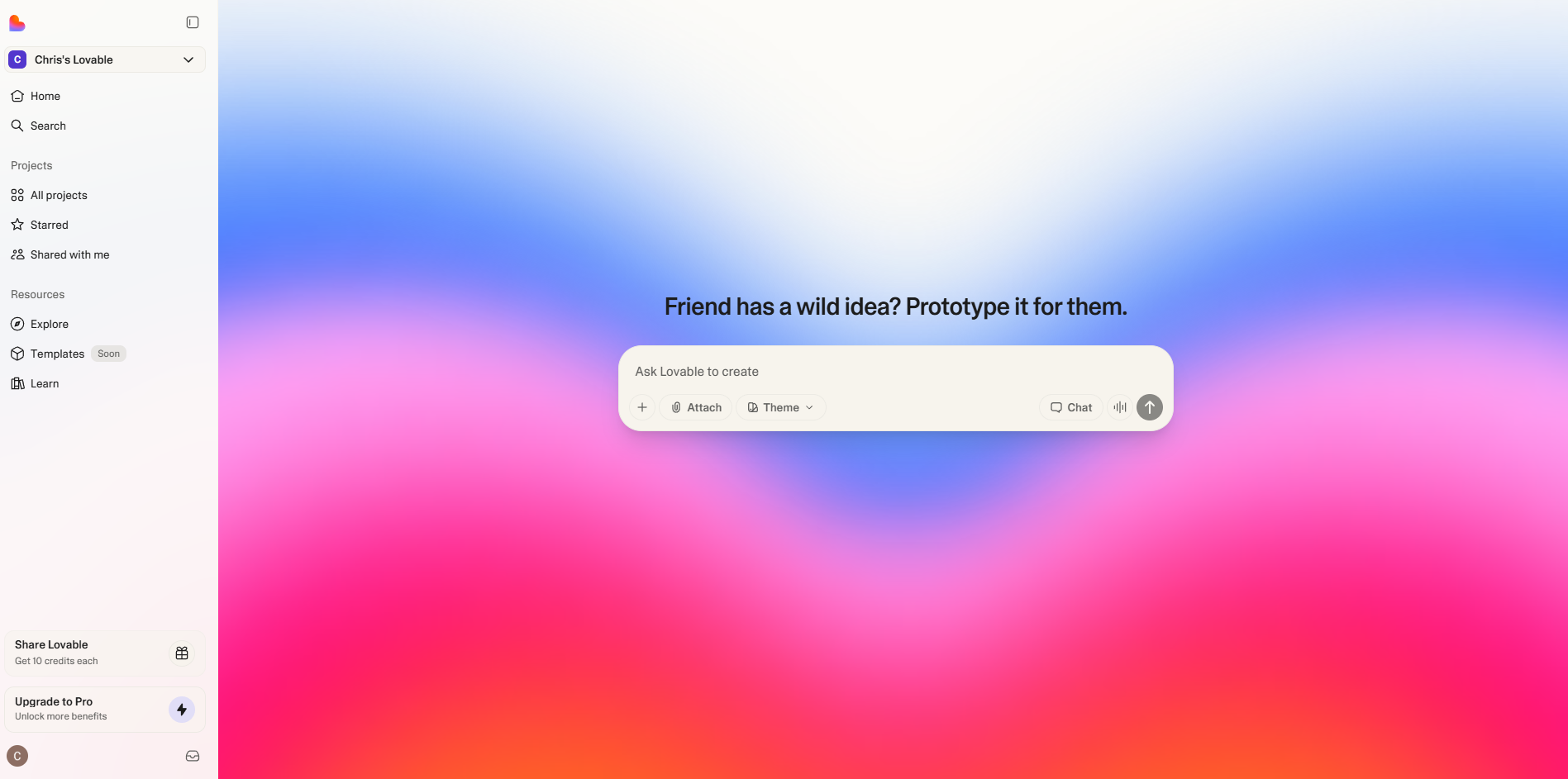
Explore the course | Open the quick reference | View practice solutions
#Build more than a prototype
Lovable can take an idea from a natural-language prompt to a deployed full-stack web application. This course teaches the entire workflow, including the parts short tutorials usually skip: planning, data ownership, authorization, testing, security reviews, release discipline, analytics, monitoring, Git collaboration, and hosting choices.
[!TIP] Learn by building. Keep one practice project open as you work through the modules. Each lesson includes prompts, checkpoints, acceptance criteria, and direct links back into Lovable.
| At a glance | |
|---|---|
| 15 focused modules | Foundations through production operations |
| Hands-on capstone | Build a secure multi-user Book Club Hub |
| Beginner accessible | No coding experience required for Modules 1-6 |
| Production minded | RLS, secrets, tests, scans, deployment, and monitoring |
| Documentation reviewed | Audited against official Lovable docs on July 18, 2026 |
#Why this course
| You will learn to | What that means in practice |
|---|---|
| Direct Lovable clearly | Use Plan and Build modes, strong prompts, knowledge, references, skills, and subagents |
| Build complete products | Add database, authentication, storage, server functions, integrations, AI, and payments |
| Protect users and data | Enforce authorization with RLS, keep secrets server-side, and run security scans |
| Prove the app works | Use browser testing, frontend tests, direct edge calls, edge tests, and debugging evidence |
| Ship with confidence | Publish snapshots, connect domains, improve SEO/AEO, review analytics, and monitor releases |
| Own the code | Use GitHub or GitLab sync, branches, pull requests, CI, and external hosting when needed |
#Who it is for
- First-time app builders who want a guided path
- Founders turning an idea into a usable product
- Designers, marketers, educators, and operations teams
- Developers collaborating with non-developers
- Teams evaluating Lovable for real production work
No coding experience is required to begin. The later modules introduce code inspection, APIs, Git, and infrastructure in plain language.
#Learning roadmap
#Phase 1: Foundations
Build a strong product foundation before adding backend complexity.
| Module | Focus | Outcome |
|---|---|---|
| 01 | Welcome to Lovable | Understand workspaces, projects, previews, publishing, and current project stacks |
| 02 | Starting Your First Project | Start from prompts, references, remixes, screenshots, templates, and design guidance |
| 03 | Build Mode and Plan Mode | Plan decisions safely, approve implementation, and control execution |
| 04 | Editing, Knowledge, and Iteration | Use the preview toolbar, persistent context, references, comments, and history |
| 05 | Prompting for Reliable Results | Write scoped prompts with constraints, states, acceptance criteria, and verification |
Foundation checkpoint: Open Lovable and build your first complete workflow.
#Phase 2: Full-stack delivery
Turn the interface into a secure, tested, published application.
| Module | Focus | Outcome |
|---|---|---|
| 06 | Full-Stack Apps with Lovable Cloud | Add database, auth, RLS, storage, functions, secrets, connectors, APIs, and payments |
| 07 | Inspecting and Editing Code | Navigate the code editor, reference exact lines, and make safe manual changes |
| 08 | Publishing and Operating Your App | Release safely with domains, security checks, SEO/AEO, analytics, and monitoring |
| 09 | Real-World Project: Book Club Hub | Build a complete multi-user app through reviewable milestones |
| 10 | Debugging, Testing, and Security | Reproduce failures, prove fixes, prevent regressions, and review vulnerabilities |
Launch checkpoint: Build, test, and publish your app with Lovable.
#Phase 3: Advanced practice
Scale your workflow, integrations, collaboration, and infrastructure choices.
| Module | Focus | Outcome |
|---|---|---|
| 11 | Advanced Prompt Patterns | Run audits, preserve invariants, stage migrations, and create reusable workflows |
| 12 | Performance, SEO, and Operations | Measure performance, control Cloud usage, improve discovery, and observe releases |
| 13 | Advanced Integrations and APIs | Design secure OAuth, gateway, webhook, retry, rate-limit, and idempotency flows |
| 14 | Git Sync and Collaboration | Work with repositories, branches, local development, pull requests, and CI |
| 15 | External Hosting and Portability | Choose hybrid or external hosting based on the project's real stack and constraints |
Advanced checkpoint: Open Lovable and apply the advanced workflows.
#The capstone
In Module 9, you build Book Club Hub, a complete multi-user application with:
- Email and Google authentication
- Private clubs, roles, invitations, books, progress, and notes
- Lovable Cloud database, storage, edge functions, and logs
- Row-level security tested across multiple user roles
- Frontend, backend, and browser verification
- Basic and Deep security scans
- Production publishing, SEO/AEO, analytics, and monitoring
The project is intentionally milestone-based so you learn how to review architecture, data policies, and behavior before piling on more features.
#Quick start
- Open Lovable and create a free account or enter your workspace.
- Start with Module 1 and create the reading-list practice project.
- Keep the Quick Reference open while you build.
- Complete Modules 1-10 in order, then choose advanced modules based on your project.
- Use a disposable project for migrations, destructive experiments, and security exercises.
[!IMPORTANT] Lovable changes quickly. Product controls can move before screenshots or third-party tutorials catch up. This course prioritizes current concepts and links directly to the official documentation for time-sensitive details.
#Course resources
| Resource | Use it for |
|---|---|
| Quick Reference | Prompt templates, mode chooser, checklists, and current navigation |
| Pricing, Credits, and Plans | Current credit behavior, grants, plan differences, and cost controls |
| Troubleshooting Guide | Preview, production, auth, RLS, APIs, payments, Git, and performance issues |
| Practice Solutions and Hints | Reference approaches for exercises across the complete course |
#Official Lovable documentation
| Topic | Official source |
|---|---|
| Platform overview | Welcome to Lovable |
| First project | Quick start |
| Better prompts | Prompting best practices |
| Backend | Lovable Cloud |
| Quality | Test and verify your app |
| Security | Security overview |
| Deployment | Publish your project |
| Pricing | Credits and usage |
| Complete index | Lovable documentation index |
#Start building
You do not need the perfect idea or a complete specification. Start with one user, one useful action, and one small project. The course will help you add the rest deliberately.
#Contributing
Lovable evolves quickly. Open an issue or pull request when a workflow changes, a documentation link moves, or a lesson needs clarification. Include the official source and the date you verified it.
#Disclosure
Some links to Lovable are affiliate links. If you sign up through one of these links, this course may earn a commission at no additional cost to you. Documentation links go directly to the official source.
This is an independent educational repository and is not official Lovable documentation.